Skip to Space Now Kids
SPACE NOWKIDS

SPACE NOW KIDS · FOR PARENTS AND EDUCATORS

The next five space moments worth showing your kid

Five real moments, the useful part to notice, and one good question to ask. Dates move, so this page is the current source of truth.

One useful briefing each week.No alerts. No child accounts. No filler.
What changedInitial Next Five revision.Revision kids-next-five-8360acce9609df01

A grown-up cheat sheet, kept current

This edition’s five

Prepared August 10, 2026 at 11:20 PM CDT. Source dates and confidence appear on every card.

WINDOW SETSep 12–30, 2026Window; not an exact promise
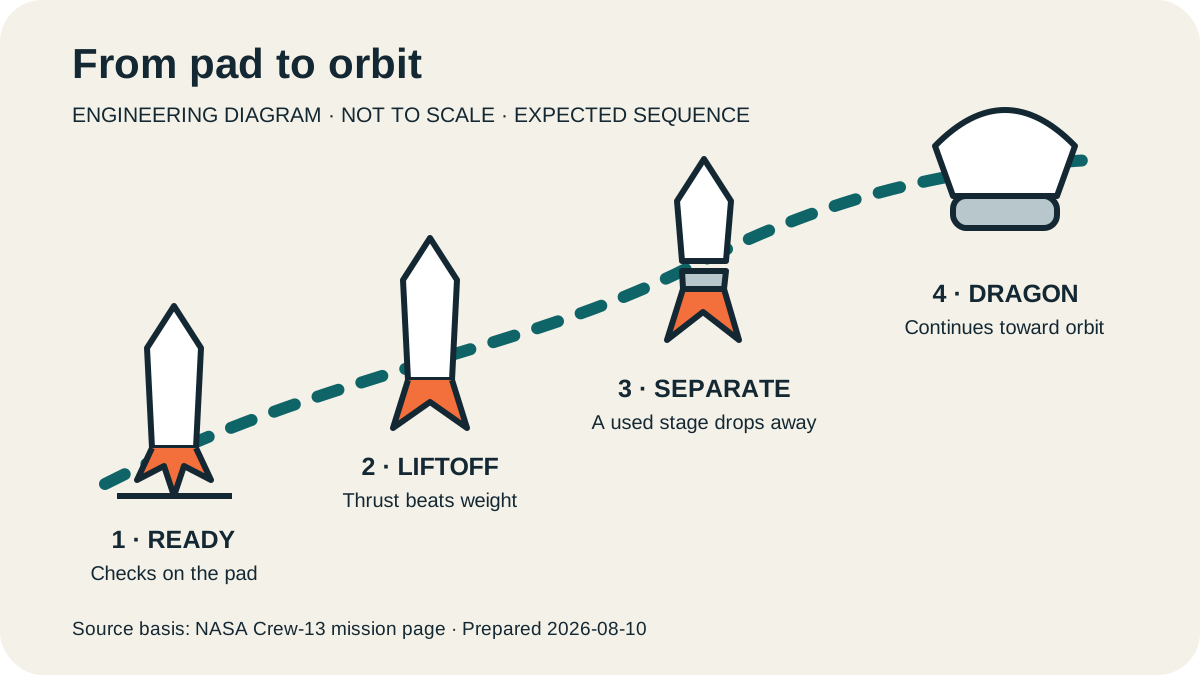
Crew-13 begins its trip to the space station. engineering diagram, not to scale, expected.ENGINEERING DIAGRAM · NOT TO SCALE · EXPECTED
Why show them
Four astronauts will leave Earth in Dragon and begin a journey to the International Space Station—a laboratory that circles our planet roughly every 90 minutes.
Look for
Watch the rocket clear the tower, then listen for stage separation and Dragon separation. Each confirms a different part of the ride worked.
Tell them this
Reaching orbit is not the finish line. Dragon still has to catch a station moving around Earth and dock with it.
Ask them
Which moment would convince you the launch worked—and which would prove the whole trip worked?
What happens next
NASA publishes the exact launch opportunity; liftoff and docking follow if conditions are ready.
WINDOW SETSeptember 2026–December 2026Window; not an exact promise
Open the grown-up briefing
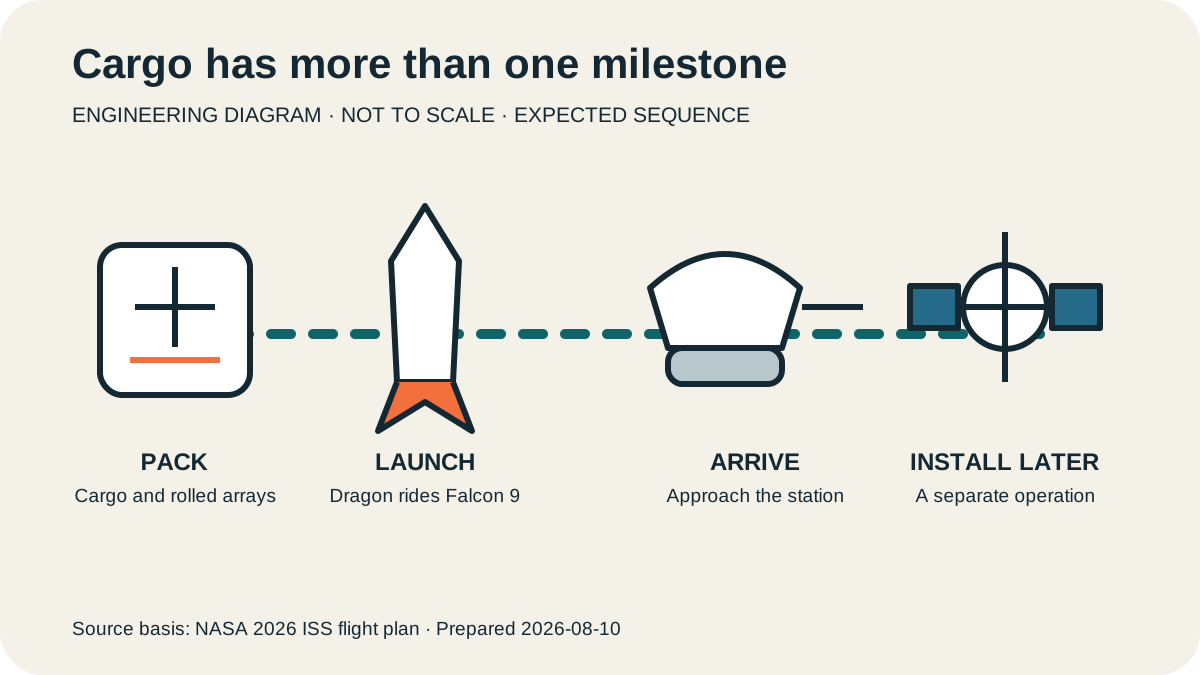
A cargo ship carries new power hardware to orbit. engineering diagram, not to scale, expected.ENGINEERING DIAGRAM · NOT TO SCALE · EXPECTED
Why show them
CRS-35 is expected to carry more than 7,200 pounds of cargo and payloads, including rolled-up solar-array hardware for the International Space Station.
Look for
Separate the milestones: launch, Dragon separating from Falcon 9, station approach, and later installation work. The arrays do not unfold during launch.
Tell them this
A delivery can be successful before its most interesting cargo is ever used. Space missions often depend on a chain of later operations.
Ask them
If you were packing for a laboratory that cannot visit a store, what would be hardest to replace?
What happens next
A dated NASA mission page or launch advisory.
WINDOW SETNovember 2026Month; exact sequence not set
Open the grown-up briefing
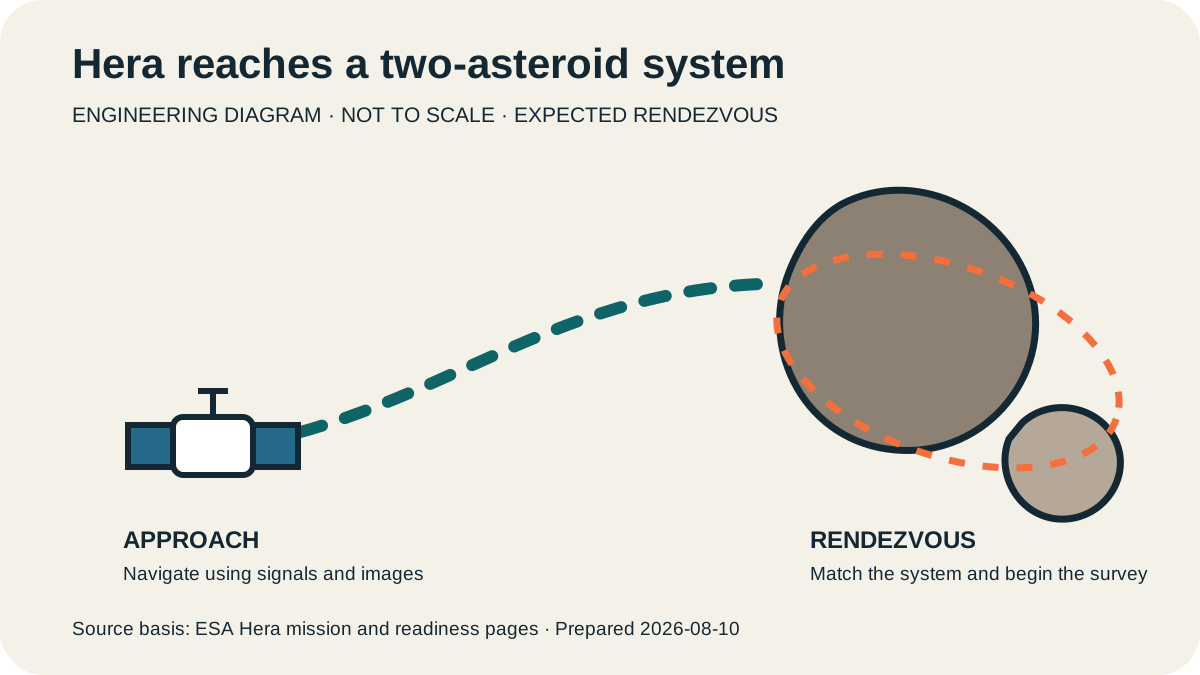
Hera reaches the asteroid humans nudged. engineering diagram, not to scale, expected.ENGINEERING DIAGRAM · NOT TO SCALE · EXPECTED
Why show them
Hera is expected to meet Didymos and its moon Dimorphos, then study the result of NASA’s 2022 DART impact—the first test of changing an asteroid’s motion.
Look for
Treat the first pictures as clues, not proof by themselves. Confirmation should combine navigation data, images, and ESA’s statement that rendezvous was achieved.
Tell them this
Hera is the detective arriving after the crash test. It measures what changed so future asteroid-deflection plans can be based on evidence.
Ask them
What would you measure to learn whether a tiny moon’s path really changed?
What happens next
ESA publishes a dated arrival sequence or official first-image advisory.
WINDOW SETNovember 2026Month; exact sequence not set
Open the grown-up briefing
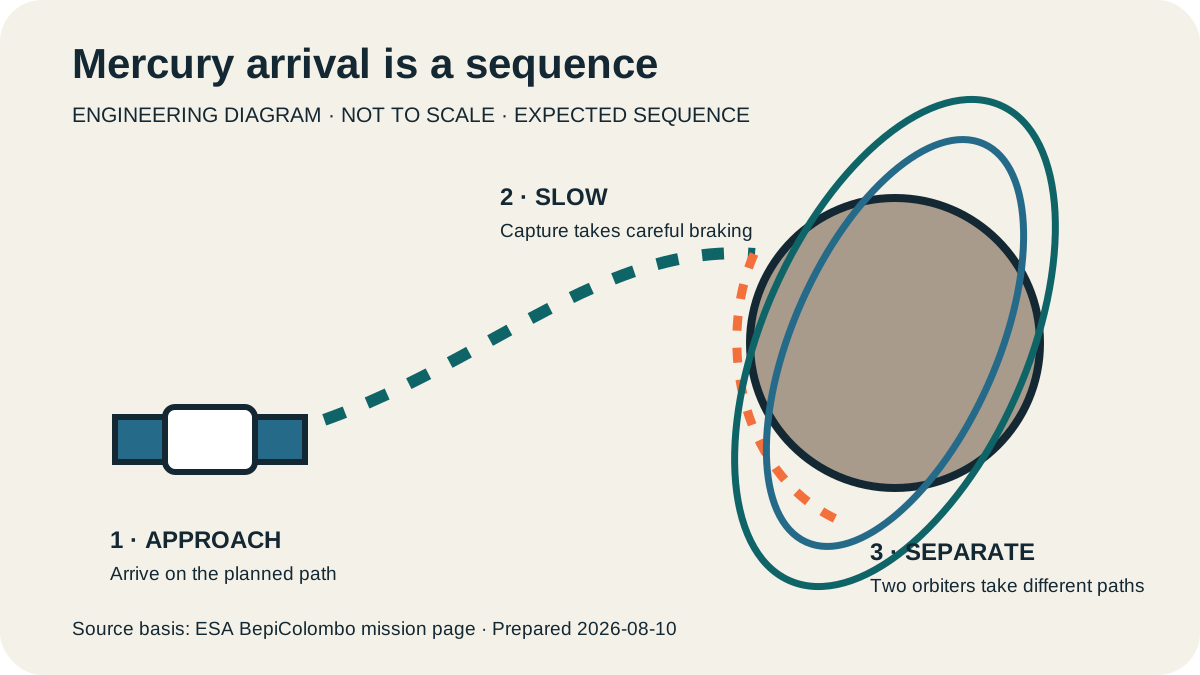
BepiColombo finally arrives at Mercury. engineering diagram, not to scale, expected.ENGINEERING DIAGRAM · NOT TO SCALE · EXPECTED
Why show them
After an eight-year journey and nine planetary flybys, BepiColombo is expected to begin its complex Mercury arrival and place two science orbiters on different paths.
Look for
Listen for separate confirmations: transfer-module separation, capture or arrival operations, and later deployment of the two orbiters. Arrival is a sequence, not one switch.
Tell them this
Getting close to the Sun is difficult because a spacecraft must lose the sideways speed it inherited from Earth instead of simply falling inward.
Ask them
Why might two orbiters learn more by following different paths around the same planet?
What happens next
ESA publishes the dated arrival timeline and coverage plan.
WINDOW SETDecember 2026–January 2027Window; not an exact promise
Open the grown-up briefing
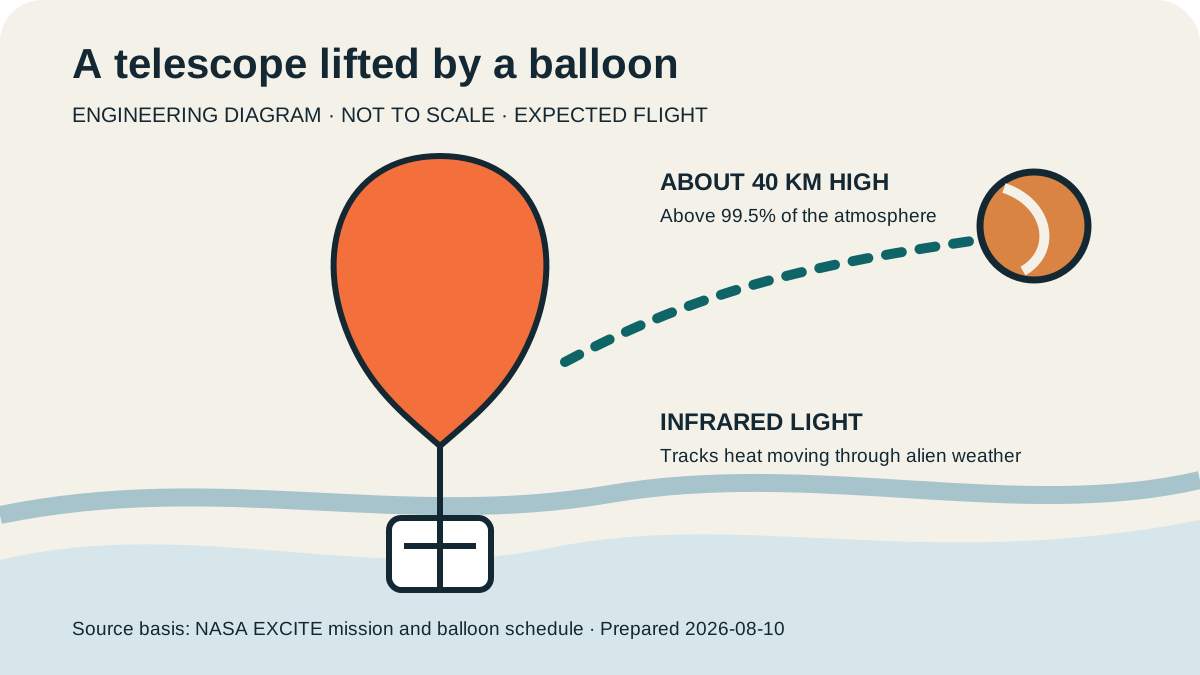
A balloon lifts a telescope above almost all the air. engineering diagram, not to scale, expected.ENGINEERING DIAGRAM · NOT TO SCALE · EXPECTED
Why show them
EXCITE is designed to fly at about 132,000 feet—40 kilometers—so its infrared telescope can study how heat moves through the atmospheres of hot Jupiters.
Look for
Balloon inflation, release, climb, and the tracking path are the showable milestones. Useful science data come later and are not guaranteed by a successful launch.
Tell them this
At its planned altitude, EXCITE would be above about 99.5% of Earth’s atmosphere while still hanging under a balloon.
Ask them
Why might a telescope see infrared light more clearly above most of the atmosphere?
What happens next
NASA or the Columbia Scientific Balloon Facility publishes a launch opportunity and tracking link.

Save the useful part

Tools for grown-ups

The two-page guide covers all five. The Mission Control Kit adds a watch plan and reusable mission basics for a first-time space family.

How to read this

Dates are plans. Sources are evidence.

A window is a usable span, not a promise. We name the first-party source, say when it was checked, and keep the last approved edition visible when a source is temporarily unavailable.