

Past briefing
Space Now
What changed, why it matters, and what to watch next.
News from the last 24 hours, plus the ongoing storylines shaping the roadmap
Catch up fast
Today in 60 seconds
The three fastest entry points into today's briefing.
The Briefing
The developments worth your attention right now
If you only have a minute, start here. These are the changes most likely to affect missions, schedules, or the longer arc of the story.
Webb separates the Lion Nebula’s dust from its glow
Webb observed the Lion Nebula with its NIRCam and MIRI instruments. NASA and ESA say the resulting images distinguish its compact dusty structures from the surrounding haze more clearly than Hubble’s earlier visible-light view.
The sharper separation gives astronomers a better map of how the stellar remnant energizes the material around it. It also shows what Webb adds beyond a prettier picture: infrared instruments can expose structures that visible light blends together.
NASA and ESA released the observations on August 10, providing a new look at the nebula across near- and mid-infrared wavelengths.
What we know
- The NASA/ESA/CSA James Webb Space Telescope has taken images of NGC 2392, nicknamed the Lion Nebula. Webb’s infrared vision highlights compact clumps of dust and haze of ionised gas, while the key white dwarf’s energy powers the nebula’s intricate structure.
- NASA’s James Webb Space Telescope has taken new images of NGC 2392, nicknamed the Lion Nebula. Webb used its NIRCam and MIRI instruments, and its infrared vision highlights compact clumps of dust and a haze of ionized gas more clearly than Hubble’s earlier visible-light view.
What remains unknown
- Whether the target, status, webcast, or mission outcome changes again after the next public update.
Detailed scientific analysis or follow-up observations that connect the newly resolved features to the nebula’s structure and evolution.
ESA
The NASA/ESA/CSA James Webb Space Telescope has taken images of NGC 2392, nicknamed the Lion Nebula. Webb’s infrared vision highlights compact clumps of dust and haze of ionised gas, while the key white dwarf’s energy powers the nebula’s intricate structure.
Open sourceNASA
NASA’s James Webb Space Telescope has taken new images of NGC 2392, nicknamed the Lion Nebula. Webb used its NIRCam and MIRI instruments, and its infrared vision highlights compact clumps of dust and a haze of ionized gas more clearly than Hubble’s earlier visible-light view.
Open sourceStarlink 10-19 slips to Monday
Spaceflight Now reports that SpaceX scrubbed Sunday’s Falcon 9 attempt and moved the 29-satellite mission to August 11.
Another Starlink delay is minor unless it persists. The useful development is whether Falcon 9 flies on the revised date or the hold starts affecting nearby missions.
Quick hits
Also worth knowing
Three smaller developments worth keeping on your radar.
Defense customers are treating rapid turnaround less like a niche feature and more like an operating requirement.
Science missionsNASA’s public schedule continues to target Aug. 30, 2026, for the Nancy Grace Roman Space Telescope.Roman is close enough to launch that a firm confirmation or delay would matter quickly.
Lunar infrastructure in development for sustained exploration and science operations.Several NASA-backed CLPS cargo missions remain spread across 2026 and 2027.A durable lunar program needs repeatable deliveries, not isolated landings.
Artemis III prime crew members
Crew assignment is not evidence the mission will launch on time, but it is a concrete development that NASA is moving from architecture drawings into flight preparation.
This turns Artemis III from a program milestone into a named crewed mission with training and integration work now visible.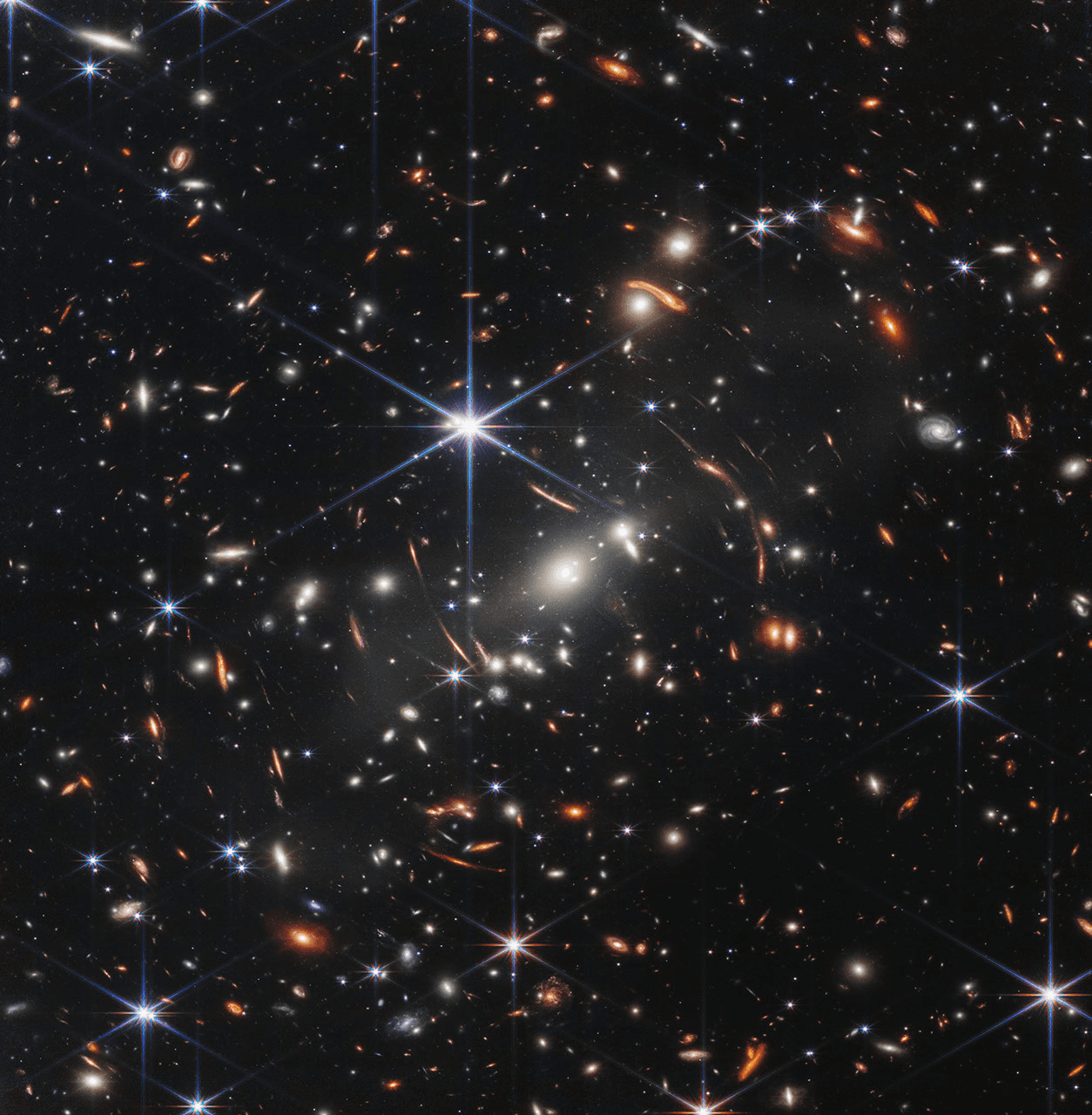
Webb caught a clue about black holes that may have formed first
NASA's Webb team reports evidence that a massive early-universe black hole in Abell2744-QSO1 may have formed before a mature host galaxy.
The image shows a lensed Little Red Dot in Pandora's Cluster, magnified into multiple views that let Webb study gas motion near a distant black hole.
It is a reminder that the same space ecosystem tracking rockets also expands the story of how the universe built its first structures.
You're caught up. Check back after the next source and editorial review.
What to Watch Next
The moments this briefing was watching
These were the events Space Now was watching from this briefing date.
Starship Flight 14 orbital attempt
SpaceX plans an orbital mission with operational Starlink V3 satellites; regulatory clearance and a firm date remain the gates to watch.
New Glenn recovery and test plan
Upper-stage work at Stennis could proceed while Launch Complex 36 is rebuilt, preventing the pad from controlling every part of the schedule.
Falcon 9 launch of MRV-1 from Cape Canaveral
MRV-1 carries a robotic system intended to extend the working lives of satellites in geostationary orbit.