
 Your Guide to Space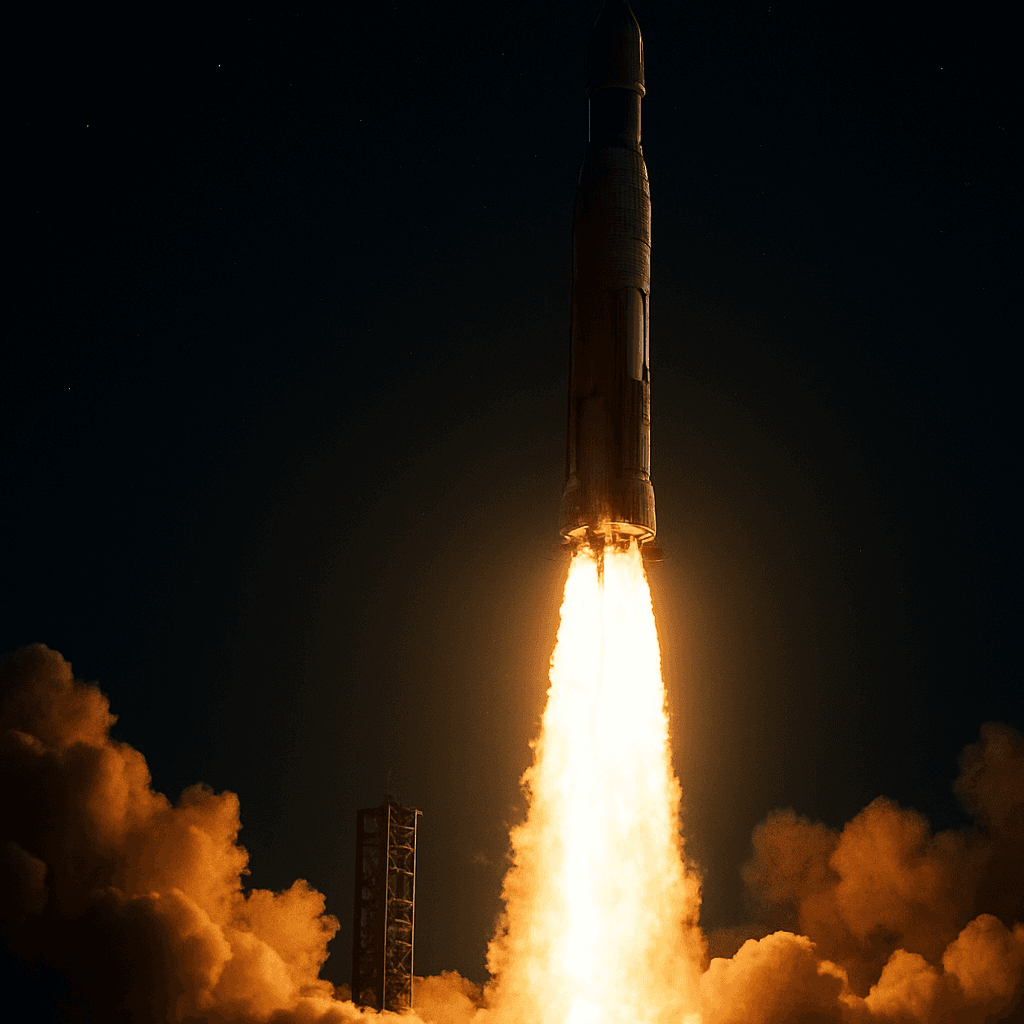
Weekly briefing archive
H3 loses its date while Hayabusa2 makes history
Japan supplied both the clearest technical win and the sharpest schedule correction; Britain’s orbital debut stayed blocked, while lunar navigation moved from plan to payload.
Progress split cleanly between hardware that performed and programs still negotiating the calendar: Hayabusa2 and NASA’s lunar receiver advanced, while H3 and RFA reminded everyone that a launch date is only a claim until the vehicle agrees.
JAXA postponed the next H3 navigation mission, RFA remained stuck without a replacement date for Britain’s first home-soil orbital attempt, and NASA handed lunar-navigation hardware to Intuitive Machines. The cleanest achievement came from Hayabusa2, which JAXA says set a flyby record and completed world-first laser ranging. Next, watch for a new H3 date, RFA’s diagnosis and a crowded slate led by BlueBird 11–13.
Lead stories
The developments that defined this week.
JAXA stopped the H3 clock
JAXA’s Aug. 3 notice postponed the Michibiki 7 mission aboard H3 Flight 9, superseding the earlier rescheduled plan that included reserve availability. That matters because extra calendar room did not preserve the attempt: Japan’s navigation payload and H3 now need a fresh target, not merely another backup day. The next useful update is a firm date accompanied by renewed launch preparations.
Britain’s orbital debut is waiting on engineering, not optimism
RFA One remains delayed after testing at SaxaVord exposed a vehicle issue requiring further investigation. No replacement target has been reported. This puts the historic label in its proper place: Britain’s first home-soil orbital attempt cannot happen until RFA publishes a diagnosis, completes the required work and clears the rocket to try again.
A small receiver makes lunar infrastructure more concrete
A 3.5-pound navigation receiver has left NASA’s hands for integration with Altus-1, Intuitive Machines’ first lunar relay satellite. NavCube3-mini is designed to use GPS and Galileo developments at lunar distances while drawing less than 20 watts. Delivery is not a working relay network, naturally, but it turns part of that network from proposal into hardware moving through integration.
Hayabusa2 produced the week’s strongest technical result
JAXA says Hayabusa2 achieved world-first laser ranging during an asteroid flyby and set a new closest-approach record for a Solar System body flyby mission. Those are operational accomplishments, not schedule promises, and they show the value still being extracted from the asteroid explorer long after its original sample-return work.
What changed
The week's meaningful movement.
The Aug. 6 H3 listing is no longer current after JAXA’s postponement notice.
RFA’s UK debut moved from a launch story to an open-ended engineering investigation, with no replacement target reported.
NASA’s commercial lunar-relay work gained delivered flight hardware: NavCube3-mini is with Intuitive Machines for Altus-1 integration.
Hayabusa2 added a laser-ranging first and a closest-approach record to its mission record.
The week ahead
What to watch next.
| When | Watch item | Type |
|---|---|---|
| Aug 4, 2026, 8:50 AM | Long March 8A | Unknown Payload The Wenchang mission is listed for 08:50 UTC, but its payload remains unidentified; confirmation after the attempt is the useful evidence. | Launch |
| Aug 4, 2026, 2:00 PM | Falcon 9 Block 5 | Starlink Group 17-53 SpaceX is targeting a Vandenberg departure for another communications batch. Watch range status and any timing change. | Launch |
| Aug 5, 2026, 2:35 AM | Smart Dragon 3 | Unknown Payload China Rocket Co. has an unidentified mission listed from Haiyang Oriental Spaceport; payload disclosure and an outcome are the meaningful follow-ups. | Launch |
| Aug 5, 2026, 7:42 AM | Falcon 9 Block 5 | BlueBird 11-13 (Block 2 #6-8) Three BlueBird communications satellites are slated to fly from Cape Canaveral. Weather, range clearance and deployment will decide the result. | Launch |
| Aug 8, 2026, 2:00 PM | Falcon 9 Block 5 | Starlink Group 17-38 A second Vandenberg Starlink flight holds a Saturday target, pending the usual range and timing confirmations. | Launch |
| Aug 9, 2026, 11:00 AM | Long March 7A | Unknown Payload Treat the Wenchang listing as a calendar hold: both the payload and the attempt remain to be confirmed. | Launch |
| Schedule watch | A firm attempt date within the revised plan, followed by H3 launch preparations. The next decisive H3 development is a replacement target backed by visible mission processing. | Event |
| Schedule watch | H3-22 | Michibiki 7 (QZS-7) Postponed by JAXA on Aug. 3; the previous Aug. 6 listing is no longer a current attempt time. | Launch |
Week timeline
The week, in order.
| Moment | Target | Why it matters |
|---|---|---|
| NROL-95 reaches orbit | Jul 30, 2026, 7:10 AM | A Falcon 9 successfully flew the classified National Reconnaissance Office mission from Cape Canaveral. |
| Another Starlink batch departs California | Aug 1, 2026, 3:08 AM | SpaceX sent 24 Starlink satellites into orbit from Vandenberg on the Group 17-52 flight. |
| RFA’s fault investigation becomes the story | Aug 2, 2026, 10:00 AM | Reporting confirmed that the UK launch attempt remained delayed after a test uncovered a vehicle problem requiring more work. |
| Michibiki 7 comes off the calendar | Aug 3, 2026, 3:05 PM | Japan’s space agency postponed QZS-7 aboard H3 Flight 9, leaving the mission in need of a replacement attempt time. |
| Lunar navigation hardware enters integration | Aug 3, 2026, 2:20 PM | NASA disclosed that its compact NavCube3-mini receiver had been handed to Intuitive Machines for the Altus-1 relay spacecraft. |
Uncertainty
What's still in flux.
As of the Aug. 3 publication cutoff, JAXA had not supplied a replacement H3 time and RFA had not announced a new attempt, so later dates or outcomes are not assumed here.
Launch Intelligence
The story keeps moving. Stay with it.
This issue connects the week's developments. The live dashboard keeps target times, watch links, and launch detail pages one tap away as the schedule shifts.